Many of my firm's clients are not only private sector businesses, non-governmental organisations, or public agencies - but also nonprofits. The latter includes charities, foundations, or professional or affinity associations, each in an ongoing search for strategic efforts to remain relevant in a quickly changing world. Previously reliant upon peer-to-peer meetings, seminars, workshops, or conferences, these offerings are now being supplanted, in part, by the increased availability of webinars, knowledge bases, and other information exchange forums on the internet.
In 2007, Christine Stephenson wrote Educational technology associations as change agents: a case study as her Doctoral Dissertation while at Oregon State University. It addresses the role of educational technology associations as change agents within education with particular emphasis on issues of advocacy and leadership. The research addressed a single research question: How do the various stakeholders (staff, volunteers, and members) in an educational technology association describe the organization’s contribution to the educational system in terms of its role as a change agent? Data for this research were collected over twelve months and were taken from four main sources: the researcher’s journal, individual interviews, observations, and association publications (both internal and external).
Data from the interviews, observations, and documents were analyzed over the course of the year-long data collection process using a modified constant comparative method. Among other things, the participants believe that the association offers a number of benefits that make membership worthwhile and at the same time, provides important benefits to the discipline and to education as a whole. They also perceive their association as a leader and an advocate for educational technology, not just as a teaching tool, but as a medium for transforming teaching and learning.
An excerpt:
“According to the American Society of Association Executives, professional associations provide a social context in which people can find others who share a common purpose. Within this shared context they can develop relationships and make professional contributions. While associations can evolve their purpose over time or even outgrow their original purpose and still remain successful, the key to sustained success is allowing members to find meaning together and to keep the organization’s sense of purpose vital and relevant. In short, “…professional associations have a major responsibility through active leadership, strong advocacy and marketing, and timely professional development to enhance and expand the learning environment for their members”.
If the abstract is any indication, it looks like an interesting read which applies to any organisation reviewing its value proposition or assessing its ability to influence.
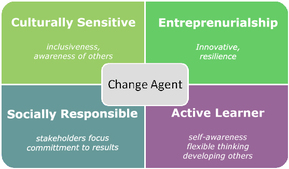
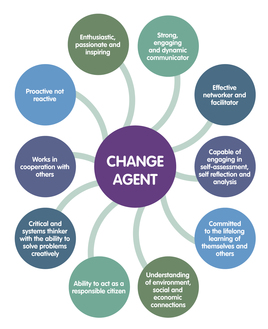
How is your entity leading the charge as a change agent?
Data from the interviews, observations, and documents were analyzed over the course of the year-long data collection process using a modified constant comparative method. Among other things, the participants believe that the association offers a number of benefits that make membership worthwhile and at the same time, provides important benefits to the discipline and to education as a whole. They also perceive their association as a leader and an advocate for educational technology, not just as a teaching tool, but as a medium for transforming teaching and learning.
An excerpt:
“According to the American Society of Association Executives, professional associations provide a social context in which people can find others who share a common purpose. Within this shared context they can develop relationships and make professional contributions. While associations can evolve their purpose over time or even outgrow their original purpose and still remain successful, the key to sustained success is allowing members to find meaning together and to keep the organization’s sense of purpose vital and relevant. In short, “…professional associations have a major responsibility through active leadership, strong advocacy and marketing, and timely professional development to enhance and expand the learning environment for their members”.
If the abstract is any indication, it looks like an interesting read which applies to any organisation reviewing its value proposition or assessing its ability to influence.
How is your entity leading the charge as a change agent?